Python vs Java: Which Programming Language Should Beginners Learn?
05
Nov
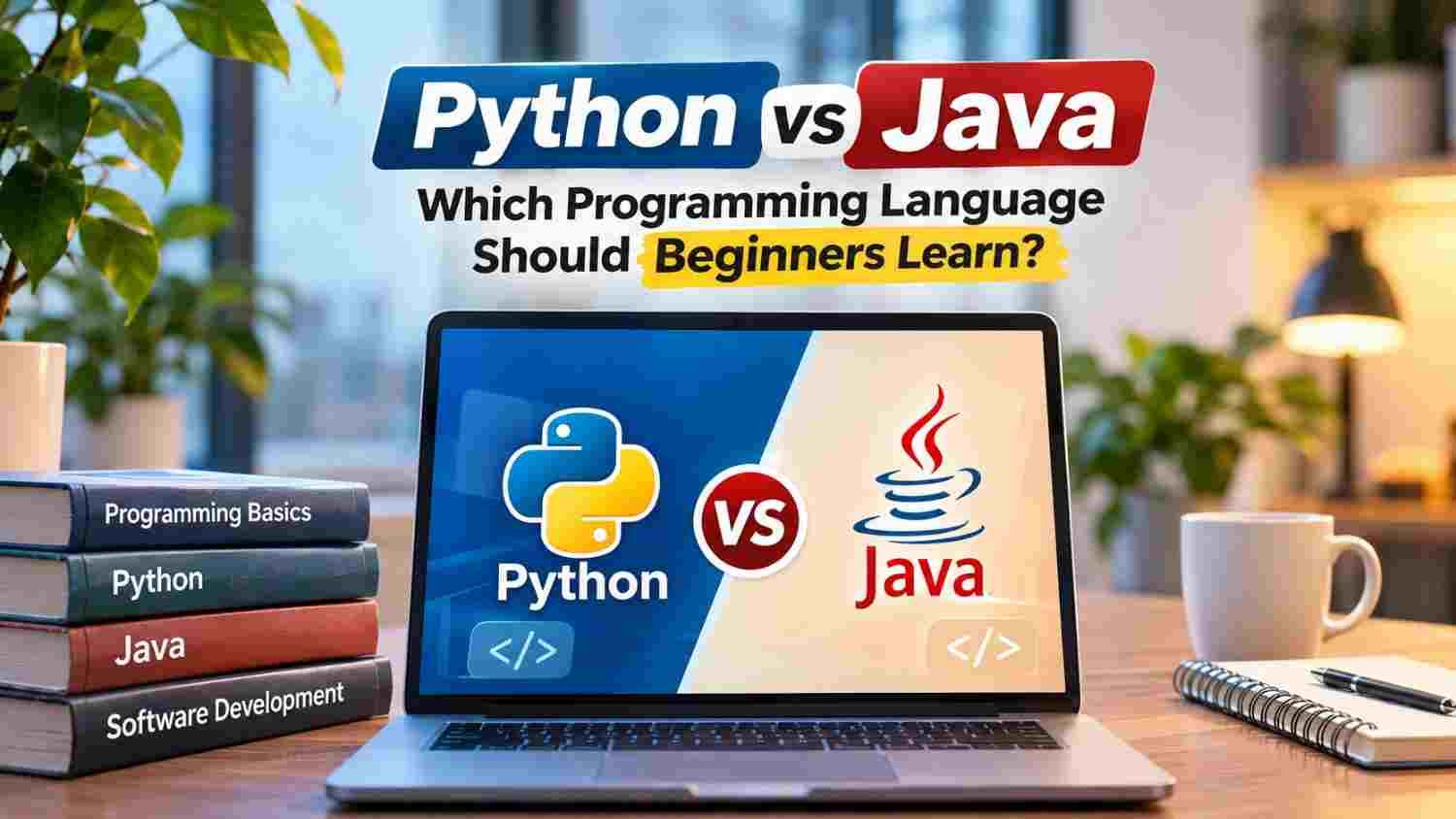
Python vs Java: Which Programming Language Should Beginners Learn?
Published: November 5, 2026
Last Updated: November 5, 2026
Quick Answer
Python vs Java for beginners is a comparison between two popular programming languages with different learning approaches. Python is generally easier to start with because it uses concise, readable syntax, whereas Java introduces explicit data types, classes and a more structured programming style.
For beginners interested in artificial intelligence, data analysis and automation, Python is a practical starting point. Students interested in object-oriented programming, enterprise software and Java-based backend development may prefer Java. The right choice depends on your learning goals rather than popularity alone.
AI Overview: How Should Beginners Choose Between Python and Java?
Beginners should choose Python if they want to learn programming fundamentals through readable code and explore areas such as machine learning, data science and automation. Java is suitable for learners who want to understand structured programming, object-oriented concepts and application development. Both languages support software development and offer different career pathways.
Before choosing, consider your interests, academic syllabus and the type of projects you want to build. Learning one language properly, practising problem-solving and creating practical projects will provide a stronger foundation than switching between programming languages frequently.
Key Takeaways
Python generally has a simpler syntax for first-time programmers.
Java uses static typing and requires more explicit code structure.
Python is widely used in AI, machine learning, data analysis and automation.
Java is widely used in enterprise applications and backend development.
Both languages support object-oriented programming.
Career opportunities depend on practical skills, projects and industry requirements.
Beginners should focus on programming fundamentals before learning multiple languages.
What Is Python?
Python is a high-level, general-purpose programming language known for its readable syntax and flexibility. It supports different programming approaches, including procedural, object-oriented and functional programming.
One reason beginners often choose Python is that they can write basic programs with relatively little code. Its extensive ecosystem of libraries and frameworks also makes it useful across several technology fields.
Common Uses of Python
Python is commonly used in:
Artificial Intelligence and Machine Learning: Developing intelligent applications and machine learning models.
Data Science: Analysing datasets, creating visualisations and identifying patterns.
Web Development: Building backend applications with frameworks such as Django, Flask and FastAPI.
Automation: Automating repetitive tasks and business workflows.
Scientific Computing: Supporting research, calculations and simulations.
Simple Python Code Example
name = "Student"
print("Hello,", name)
This program stores a name in a variable and displays a greeting. Python does not require an explicit variable type declaration in this example.
What Is Java?
Java is a general-purpose, class-based programming language commonly used to develop structured and large-scale software applications. It follows a statically typed approach, meaning developers declare data types when writing many variables and expressions.
Java source code is compiled into bytecode, which runs on the Java Virtual Machine (JVM). This allows Java applications to run on different platforms that support a compatible JVM.
Common Uses of Java
Java is commonly used in:
Enterprise Software: Developing business applications and large software systems.
Backend Development: Building server-side applications and APIs.
Android Development: Supporting Android applications alongside modern Android development technologies.
Financial Software: Developing banking and business applications.
Distributed Systems: Building applications that communicate across multiple systems.
Simple Java Code Example
public class Main {
public static void main(String[] args) {
String name = "Student";
System.out.println("Hello, " + name);
}
}
Java requires a class and a main method in this example. This introduces beginners to its structured programming style.
Python vs Java: Key Differences
Although Python and Java can be used to solve many similar problems, their syntax, typing systems and execution environments are different.
The best option depends on the requirements of the project. Neither language is automatically better for every type of software development.
Python vs Java: Which Is Easier to Learn?
For most people who are completely new to coding, Python offers a gentler introduction. Its syntax is relatively simple, allowing learners to focus on programming concepts instead of writing lengthy program structures.
Java requires beginners to understand concepts such as classes, methods, data types and the JVM environment. This may feel challenging initially, but it can help learners become familiar with structured application development.
Why Beginners Often Find Python Easier
Readable and concise syntax.
Fewer lines of code for many basic tasks.
Flexible variable declarations.
Quick experimentation with small programs.
Useful libraries for practical projects.
Why Learning Java Can Be Valuable
Builds familiarity with static typing.
Introduces object-oriented programming early.
Encourages structured code organisation.
Helps learners understand classes and methods.
Provides experience with the Java ecosystem.
Verdict: Choose Python if you want to start writing programs quickly. Consider Java if you want to learn structured, class-based programming from the beginning.
Python vs Java: Performance and Execution
Performance is another important factor in the Python vs Java comparison. However, actual performance depends on the program, implementation, runtime, libraries, hardware and workload.
Java applications are compiled into bytecode and executed by the JVM. The JVM can use just-in-time compilation and runtime optimisations, making Java suitable for many long-running and performance-sensitive applications.
Python commonly uses an interpreter and runtime environment. Its development process can be convenient for testing ideas and building prototypes. However, standard Python code may run slower than optimised Java code in certain CPU-intensive workloads.
For beginners, understanding programming logic and writing efficient code should come before worrying about performance comparisons.
Python vs Java for Career Opportunities in India
Both programming languages can support different career paths in India's technology industry. However, learning a language alone does not guarantee a job. Employers also evaluate problem-solving ability, practical projects, databases, development tools and technical knowledge.
Career Opportunities After Learning Python
Python can help learners prepare for roles such as:
Python Developer
Data Analyst
Machine Learning Engineer
Automation Developer
Backend Developer
AI Application Developer
Useful supporting skills include SQL, data structures, APIs, Django, Flask and relevant data science or machine learning libraries.
Career Opportunities After Learning Java
Java can help learners prepare for roles such as:
Java Developer
Backend Developer
Software Engineer
Application Developer
Enterprise Application Developer
Useful supporting skills include Core Java, object-oriented programming, SQL, Spring Boot, REST APIs and data structures.
Which Language Has Better Job Opportunities?
There is no permanent winner. Job availability depends on the company, industry, location, experience level and current hiring requirements.
Before choosing, review job descriptions for the roles you want. Identify the programming languages, frameworks and supporting skills that employers regularly mention. Then build projects that demonstrate those skills.
Python vs Java for AI, Web and App Development
Your career interests can make the choice easier. Both languages have different strengths across development fields.
If you are interested in AI, machine learning or data analysis, Python is a practical starting point. If you want to explore Java backend development and enterprise software, Java is worth considering.
Python vs Java: Which Should College Students Choose?
Students should select a programming language according to their academic background, interests and career plans.
For Class 12 Students
If you are new to programming, Python can help you understand variables, conditions, loops and functions without too much initial syntax.
For BCA and Computer Science Students
Both languages can be valuable. Python supports scripting, data-related projects and rapid application development. Java helps students understand object-oriented programming and structured software development.
For Engineering Students
Java is useful for learning enterprise application development and backend programming. Python is valuable for AI, machine learning, automation and technical projects.
For Students Planning a Career in IT
Consider the job role you want to pursue rather than selecting a language only because it is popular. Review entry-level job descriptions and build your learning plan around the required skills.
Should You Learn Python or Java First?
If you are still unsure, use these practical recommendations.
Choose Python first if:
You have never written a program.
You want to explore AI and machine learning.
You are interested in data analysis.
You want to automate everyday tasks.
You prefer readable syntax while learning programming fundamentals.
Choose Java first if:
You want to understand object-oriented programming.
You are interested in Java backend development.
You want to work with enterprise applications.
Your academic syllabus uses Java.
You prefer a structured programming environment.
Can You Learn Both Python and Java?
Yes. However, beginners should ideally become comfortable with one language before moving to the other.
Start with variables, conditions, loops, functions, data structures and basic problem-solving. Once you can build small projects independently, learning another programming language becomes easier because many fundamental concepts are transferable.
Beginner-Friendly Python and Java Learning Roadmap
Regardless of which language you choose, follow a consistent learning process.
Do not focus only on watching tutorials. Write code regularly, understand errors, solve problems independently and maintain a portfolio of projects.
Common Mistakes Beginners Should Avoid
Students sometimes spend too much time comparing languages instead of practising programming. Avoid these common mistakes:
Choosing only based on popularity: A popular language may not match your career interests.
Learning without practising: Watching tutorials alone does not build programming ability.
Ignoring fundamentals: Variables, loops, functions and data structures are important in both languages.
Switching languages too frequently: Constantly changing your learning path can slow your progress.
Expecting immediate job opportunities: Employers look for practical skills, projects and problem-solving ability.
Ignoring documentation: Learning to use official documentation is an important developer skill.
How Tulyarth EduTech Can Help Students Explore Technology Learning
Choosing between Python and Java is one step towards building a career in technology. Students should also understand programming fundamentals, software development concepts, practical project work and the skills expected by employers.
Tulyarth EduTech helps students explore educational and skill-development opportunities. Before selecting a course, review its syllabus, practical training approach, faculty experience and learning outcomes.
Learn more about Tulyarth EduTech or visit the Contact Us page to explore relevant learning guidance.
Conclusion: Python vs Java – Which One Should Beginners Learn?
The choice between Python vs Java depends on what you want to achieve as a learner. Python is generally easier for beginners who want to start coding, explore AI, work with data or automate tasks. Java is a valuable choice for students interested in object-oriented programming, backend systems and enterprise application development.
Neither language is universally better. Start with one language, build a strong understanding of programming fundamentals and work on practical projects. Once you gain confidence, learning the other language can expand your technical knowledge and career options.
The best programming language to learn first is the one that supports your goals and motivates you to keep practising.
Latest Blogs
You may also find these articles helpful:
Career Options After B.Com in 2026: Jobs, Professional Courses and Higher Studies
Online vs Distance Education in 2026: Differences, Fees and How to Choose
Best Courses After 12th for Students Who Want to Start Earning Early in 2026
How to Balance College Studies and Internship in 2026: A Practical Guide
Frequently Asked Questions
Python is generally easier for beginners because its syntax is concise and readable. However, Java is also a good starting language for students who want to learn structured and object-oriented programming.
Choose Python if you are interested in AI, data science, automation or beginner-friendly coding. Choose Java if you want to focus on enterprise software, backend development or structured application programming.
Java usually requires more explicit syntax, data type declarations and class structures. Python is comparatively simpler to read and write, especially when creating basic programs.
Both languages can help you work towards software development and other technology roles. However, getting a job also requires practical projects, problem-solving skills, knowledge of relevant tools and interview preparation.
Yes, but beginners should ideally learn one language first. Once you understand programming fundamentals, learning the second language becomes easier.