Online vs Distance Education in 2026: Differences, Fees and How to Choose
22
Oct
Online vs Distance Education in 2026: Differences, Fees and How to Choose
Published: October 22, 2026
Last Updated: October 22, 2026
Choosing between online and distance education can be confusing when you want to continue your studies without attending a traditional college every day. The main difference between online vs distance education is how learning is delivered, how you interact with teachers, and how your programme is organised. Online education usually relies on internet-based classes and learning platforms, while distance education often uses self-study materials and scheduled academic support. However, the exact format varies by university. Before enrolling, compare course requirements, fees, flexibility and official recognition.
Quick Answer: Online vs Distance Education
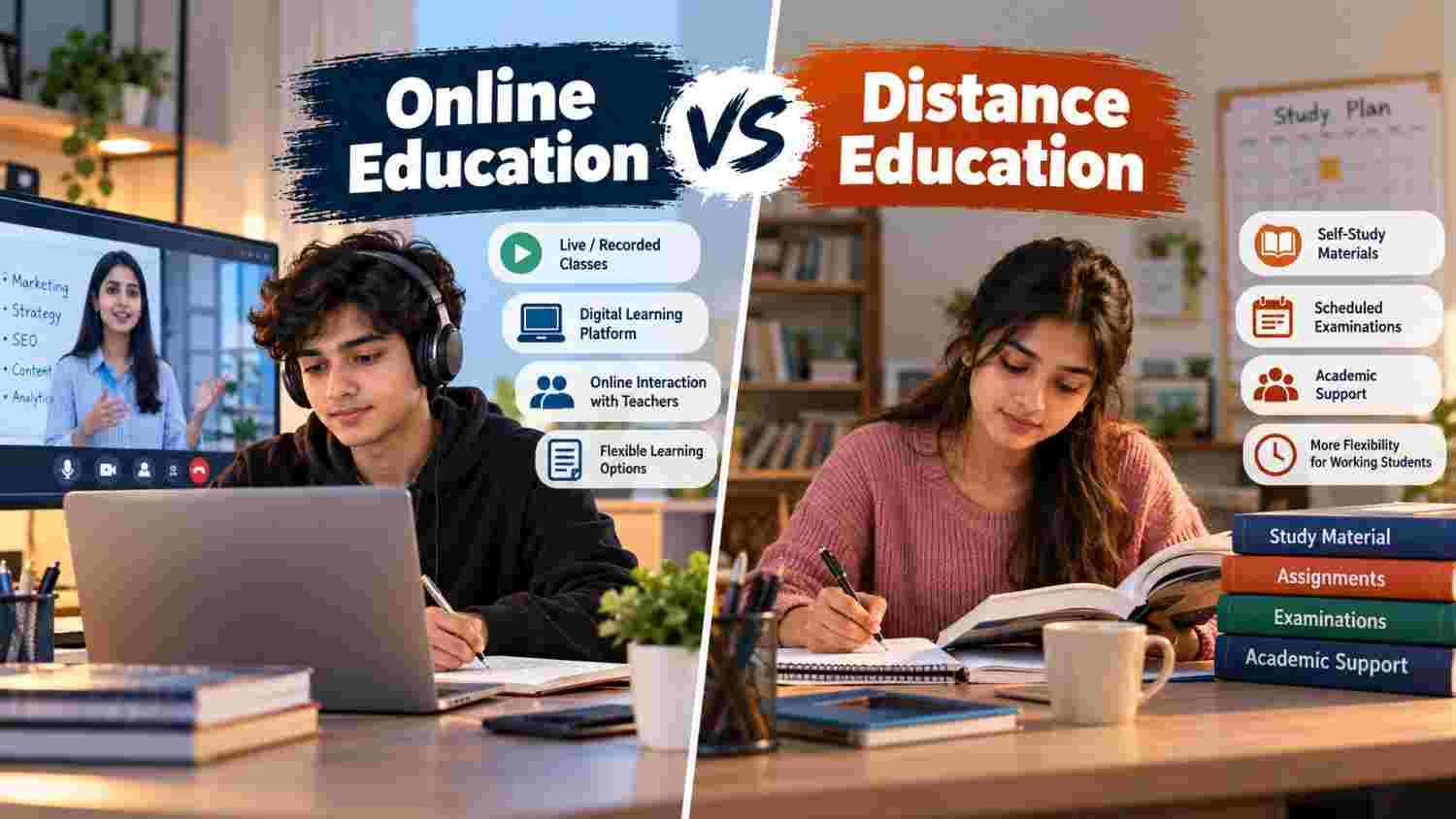
Online education mainly uses internet-based classes and digital learning platforms, while distance education often combines independent study materials with academic support. Both can suit students who need flexibility, but teaching methods, fees, and examination rules vary by university. Before enrolling, compare the course structure and verify recognition for your specific programme and admission session.
Neither mode is automatically better for every student. Online learning may suit you if you prefer digital classes and regular online interaction. Distance learning may suit you if you need more flexibility to study independently. Always check the actual programme structure before making a decision.
Key Takeaways
Online education usually relies heavily on internet-based teaching and learning platforms.
Distance education commonly offers structured self-study with academic support.
Both formats can provide recognised qualifications when offered under the applicable regulations.
Fees, assessment methods, and student support vary between universities.
Recognition must be checked for the specific programme and admission session.
Your work schedule, learning style, budget and career goals should guide your choice.
Who Should Choose Online or Distance Education?
This guide is useful for students after Class 12, college graduates considering further studies, working professionals seeking qualifications alongside a job, and learners who need flexible study arrangements.
Students after Class 12: Compare eligible undergraduate programmes, admission requirements and learning support.
Working professionals: Consider class schedules, attendance requirements, assignment deadlines and exam arrangements.
Graduates pursuing further studies: Check eligibility for postgraduate programmes and the recognition status of the specific course.
Learners balancing family or other responsibilities: Compare study flexibility, learning materials and the support provided by the university.
The right choice depends on your schedule, preferred learning method, budget and academic goals. Always verify the institution and programme's recognition status for your intended admission session before enrolling.
Students after Class 12: Compare eligible undergraduate programmes, admission requirements and learning support.
Working professionals: Consider class schedules, attendance requirements, assignment deadlines and exam arrangements.
Graduates pursuing further studies: Check eligibility for postgraduate programmes and the recognition status of the specific course.
Learners balancing family or other responsibilities: Compare study flexibility, learning materials and the support provided by the university.
What Is Online Education?
Online education is a learning format in which students access teaching and study resources through the internet. Depending on the university, you may attend live classes, watch recorded lectures, submit assignments online and communicate with teachers through digital platforms.
Some programmes offer scheduled sessions, while others provide recorded lessons that students can complete at convenient times. Therefore, the amount of flexibility depends on the course.
Online education may suit you if:
You have reliable internet access.
You prefer learning through digital lectures and online resources.
You want opportunities to interact with teachers online.
You can manage deadlines and online assessments.
You are comfortable using computers or smartphones for study.
For example, a working student might watch a recorded lecture after work and submit an assignment through the university's learning platform. However, some programmes still require fixed class times or specified examination arrangements.
What Is Distance Education?
Distance education is when students study without attending regular classroom teaching. In India, university-level distance programmes are commonly described as Open and Distance Learning (ODL).
Depending on the institution, learning may involve printed or digital study materials, recorded lectures, assignments, academic counselling, and scheduled examinations. Some universities also provide online student portals and other digital resources.
Distance education may suit you if:
You need flexibility around work or family responsibilities.
You prefer independent study.
You can follow a study schedule without daily classroom supervision.
You need to balance education with other commitments.
You want to explore a programme offered through an approved distance-learning mode.
For example, a student who works during the day may use university study materials in the evening and prepare for examinations according to the published academic calendar.
Distance education does not mean that every task can be completed whenever you want. Assignment deadlines, practical requirements, examinations, and other academic rules still apply.
Online vs Distance Education: Main Differences
These are general differences, not universal rules. A distance programme may use extensive online learning, while an online programme may have fixed schedules. Always review the specific course details.
Online vs Distance Education: Which Is Better for You?
The right option depends on how you learn, how much time you have, and what qualification you need.
Choose Online Education If You Prefer Digital Learning
Online education may be suitable if you learn well through videos, digital resources, and online discussions. It can also work well if you have a reliable internet connection and can attend scheduled sessions when required.
Before enrolling, ask whether lectures are live or recorded, how teachers answer questions and how assignments are evaluated.
Choose Distance Education If You Prefer Independent Study
Distance education may be useful if you prefer studying at your own pace within the university's academic deadlines. It can be helpful for students balancing work, family responsibilities or other commitments.
However, independent learning requires discipline. You should be comfortable setting weekly study goals and preparing for examinations without daily classroom supervision.
Compare Career and Qualification Requirements
Do not choose a programme based only on its learning format. First, identify the qualification you need for your intended career or further education.
Check whether employers or future universities require a particular degree, subject combination or mode of study. Also verify whether the programme includes practical work, internships or other compulsory requirements.
Online vs Distance Education Fees in India
There is no single fee difference that applies to every online and distance programme. Costs vary by university, course, academic level and included services.
Your total cost may include:
Admission and tuition fees
Examination fees
Learning materials
Digital learning resources
Practical or laboratory charges, where applicable
Other compulsory university fees
Before enrolling, compare the complete fee structure rather than relying on an advertisement showing only the tuition fee.
Ask the university for its current official fee schedule, refund policy, and payment deadlines. Do not assume that online education is always more expensive or that distance education is always cheaper.
Is an Online or Distance Degree Valid in India?
The validity of a degree depends on the institution, programme and applicable regulatory requirements. Under UGC regulations, eligible undergraduate and postgraduate degrees awarded through recognised online or Open and Distance Learning modes are treated as equivalent to corresponding conventional-mode degrees, subject to the applicable rules.
However, not every university or programme is automatically approved for online or distance delivery. Certain disciplines are prohibited or subject to additional regulatory requirements.
Before admission:
Visit the official UGC Distance Education Bureau website.
Check the institution's recognition or entitlement status.
Confirm that your specific programme is approved for the intended academic session.
Read the university's official admission notice and eligibility conditions.
Check any additional requirements that apply to your chosen profession.
The UGC also advises students to check programme recognition for the particular session in which they plan to enrol. Recognition in an earlier year does not automatically confirm recognition for the next session.
Official reference: UGC Distance Education Bureau FAQs.
How to Choose the Right Learning Mode
Use these steps before submitting an application.
Step 1: Identify your goal. Decide whether you need a degree for employment, further education, promotion or personal development.
Step 2: Review the teaching format. Check live classes, recorded lectures, study materials, teacher interaction and attendance requirements.
Step 3: Compare total costs. Include tuition, examinations, study resources and other compulsory charges.
Step 4: Verify recognition. Confirm the institution and programme status for your admission session through official sources.
Step 5: Check assessments. Understand examination arrangements, assignment deadlines and any compulsory practical or contact sessions.
Step 6: Assess your learning habits. Consider whether you work better with scheduled online classes or independent study.
Step 7: Read the official admission notice. Confirm eligibility, programme duration, documents and application deadlines directly with the university.
Common Mistakes to Avoid
Choosing only by price: A lower fee may not mean a programme offers the support or qualification you need. Compare the full course details.
Assuming every online degree is recognised: Verify the institution and specific programme through the relevant official sources.
Ignoring examination rules: Flexible learning does not necessarily mean flexible examination dates or locations.
Believing every programme is fully self-paced: Some courses have live classes, deadlines and mandatory academic activities.
Trusting unverified admission agents: Check official university websites and avoid paying unofficial intermediaries who promise guaranteed admission or employment.
Conclusion
Choosing between online vs distance education starts with understanding your learning preferences, career goals and available time. Online learning may provide more digital interaction, while distance education often supports independent study. However, the exact experience depends on the institution and programme.
Compare teaching methods, total fees, examination arrangements and student support before applying. Most importantly, verify recognition for your specific programme and admission session through official sources.
To learn more about the organisation, visit Tulyarth EduTech's About Us page. For questions about educational guidance and course-related information, use the Contact Us page.
Latest Blogs
You may also find these articles helpful:
Best Courses After 12th for Students Who Want to Start Earning Early in 2026
How to Balance College Studies and Internship in 2026: A Practical Guide
M.Com Course in Dehradun: Eligibility, Fees, Duration & Career Scope in 2026
LLB Course in Dehradun: Eligibility, Fees, Duration & Career Scope in 2026
B.Com Course in Dehradun: Eligibility, Fees, Duration & Career Scope in 2026
Frequently Asked Questions
Neither is always better. Online education may suit students who prefer digital classes and online interaction. Distance education may suit students who prefer independent study. The best option depends on the programme and your needs.
Online education usually relies on internet-based teaching platforms, while distance education commonly uses self-study materials and academic support. In practice, the two formats can overlap, so check the university's actual teaching method.
Eligible degrees from institutions and programmes recognised under applicable UGC regulations can be treated as equivalent to corresponding conventional-mode degrees. Verify the specific institution, programme and admission session before enrolling.
Yes, these formats may help working professionals balance education with employment. However, students must still meet assignment deadlines, examination requirements and any scheduled classes or compulsory activities.
Visit the UGC Distance Education Bureau and verify the institution and specific programme for the relevant academic session. Also read the university's official admission notice before paying fees.